|
Employee Profiles: Senior Professionals
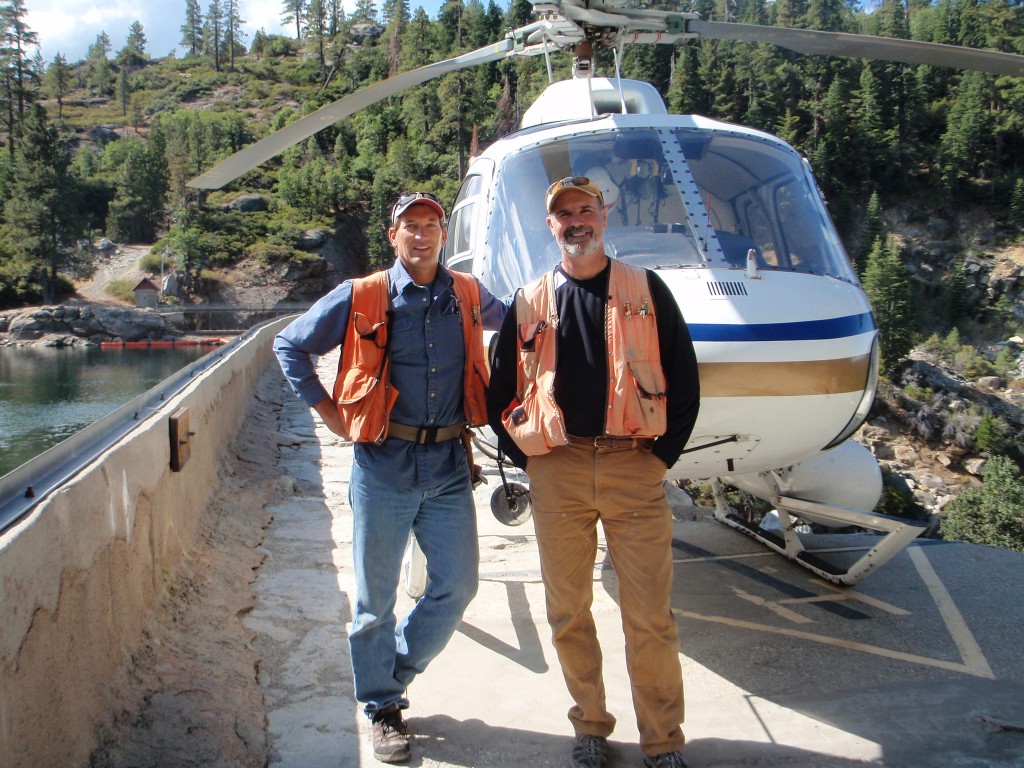
Philip L. Johnson
Supervising Engineering Geologist
Registration
Registered Geologist in California, RG 6196
Certified Engineering Geologist in California, CEG 2019
Education
M.S., Geology: San Jose State University, San
Jose, California, 1990
B.A., Geology: San Francisco State University, San Francisco, California,
1987
Areas of Specialty
Investigation and repair of landslides; landslide
mapping and aerial photograph interpretation; subsurface investigation
of landslides; geotechnical construction defect litigation support;
dam site investigations; seismic hazard assessment; and sedimentary
geology
Representative Experience
Mr. Johnson has over 13 years of experience in
the field of engineering geology, working on projects throughout
California. He has been involved with numerous engineering geologic
investigations ranging in scope from investigation of large landslide
complexes and dam sites to evaluation of geotechnical constraints
to residential development. His areas of expertise include landslide
mapping and aerial photograph interpretation, subsurface investigation
of landslides including downhole logging of large-diameter boreholes,
core logging, engineering geologic characterization for mitigation
of landslide hazards, engineering geologic investigations for dam
sites, and fluvial sedimentology.
Recent projects include investigation of a large,
deep-seated coastal landslide that threatens structures and storm
drain facilities in Daly City; investigation of a large, ancient
landslide near Cupertino; photogeologic and field mapping to evaluate
geologic constraints to a proposed bicycle trail alignment adjacent
to a large and previously unrecognized landslide complex in San
Jose; investigation of distress to structures related to expansive
soils in Antioch; an investigation of rock slope stability in the
Pacific Palisades area of Los Angeles: a geologic investigation
and formulation of mitigative measures for an active landslide in
the Silver Creek area of San Jose; mapping shallow colluvial landslides
and deep-seated landslides in an open space area in Hercules; mapping
debris flows and ancient landslides in San Anselmo; surface mapping
and subsurface investigation of several slope failures within Quaternary
terrace deposits in Watsonville; a photogeologic investigation of
quarrying history at a site in Cupertino; peer review of a landslide
hazard investigation and landslide mitigation associated with a
residential development on a large, ancient landslide complex in
San Juan Capistrano; surface mapping and subsurface investigation
of a debris flow that impacted several properties in Orinda; investigation
and repair of the active Rahara Drive Landslide in Lafayette; a
trenching investigation and air photo mapping of the Las Positas
Fault in Livermore; geologic investigation of an active landslide
that threatened several homes in Danville; investigation of a large
ancient landslide complex in Carmel Valley; a two-year long study
of a large bedrock landslide in Anaheim Hills; analysis of distress
associated with ground subsidence along the alignment of a major
subway tunnel in Los Angeles; geologic investigation of landslides
affecting a winery in Napa County and design of mitigative measures
to protect the winery buildings; mapping geologic hazards at proposed
water tank sites in the hills north of Vacaville.
Mr. Johnson has participated in a variety of geotechnical
and hydrogeologic investigations, including geologic characterization
of several dam sites. He was Project Geologist for a seismic hazard
investigation of the Foothills fault system for the New Hogan Dam
in the Sierra Nevada foothills, and participated in investigations
for two potential dam sites for East Bay Municipal Utility District,
Raised Pardee Dam and the proposed Buckhorn Dam. His responsibilities
in these dam site investigations included detailed engineering geologic
mapping, logging of exploratory core borings and trenches, water
pressure testing of boreholes, analysis of engineering geologic
data, and preparation of geotechnical reports. In addition, he mapped
the subsurface geology during construction of a soft ground tunnel
at a drinking water reservoir in San Mateo County. Other project
experience includes logging of core borings and interpretation of
geologic and geophysical data for hydrostatigraphic investigations
in folded Plio-Pleistocene rocks in Palo Alto and within fill and
bay mud along the margins of San Francisco Bay.
As a graduate student, Mr. Johnson studied Tertiary
fluvial rocks exposed on the flanks of the Rock Springs Uplift in
southwest Wyoming. Based on the spacing of fluvial channels within
overbank deposits and thickening of synorogenic sedimentary packages,
he was able to evaluate the timing and pattern of Paleocene to early
Eocene subsidence across the southern Greater Green River Basin
and relate this to thrust faulting that within the Uinta and Rock
Springs uplifts.
Professional History
Senior Engineering Geologist, 1995-Present; Cotton,
Shires and Associates,
Los Gatos, California
Staff Geologist, 1992-1995; Dames & Moore, San Francisco, California
Staff Geologist, 1990-1992; Earth Sciences Associates, Palo Alto,
California
Professional Affiliations
American Geophysical Union
Association of Engineering Geologists
Geological Society of America
International Association of Sedimentologists
Society for Sedimentary Geology (SEPM)
Publications
Johnson, Philip L., 2004, The Glen Creek Landslide:
a case study in the misuse of the Jahnsian steps during hillslope
development: in Ehlen, J., Haneberg, W.C., and Larson, R. (eds.)
Humans as Geologic Agents, Geological Society of America,
Reviews in Engineering Geology, V. XVI (in press).
Johnson, Philip L. and Cotton, William R., 2003,
An alluvium-buttressed landslide complex and the impact of late
Quaternary sea level change on landslide topography [abs.]: in Proceedings
of the 46st Annual Meeting of the Association of Engineering Geologists,
Vail, Colorado, p. 62.
Johnson, Philip L. and Cotton, William R., 2002,
The Santiago Landslide and associated ridge-top graben: implications
for paleoseismic landslide studies [abs.]: in Proceedings of
the 45nd Annual Meeting of the Association of Engineering Geologists,
Reno, Nevada, p. 70-71.
Johnson, Philip L. and Cole, William F., 2001,
The use of large-diameter boreholes and downhole logging in landslide
investigations: in Horacio Ferriz (ed.) Engineering Geology
in Northern California, California Department of Conservation,
Division of Mines and Geology, Bulletin 210, p. 95-106.
Wallace, J.M. and Johnson, Philip L., 1999, The
use of large-diameter boreholes and downhole logging techniques
in landslide investigations [abs.]: in Proceedings of the 42nd
Annual Meeting of the Association of Engineering Geologists,
Salt Lake City, Utah, p. 88.
Johnson, P.L., 1990, Laramide basin subsidence
and fluvial architecture of the Fort Union and Wasatch Formations
in the southern greater Green River basin [abs.]: American Association
of Petroleum Geologists Bulletin, v. 74, p. 687.
Also in this section:
Employee Profiles
Office Locations
Careers
Contact Us
|